Independent Music Spotlight
Gus Ormo Latidos | Groover Spotlight on Independent Music
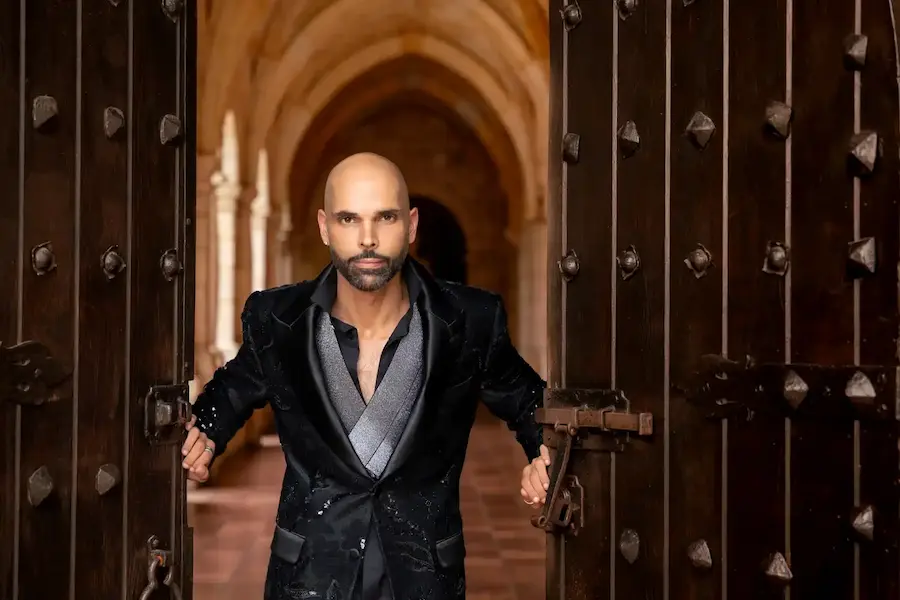
Artist: Gus Ormo
Track: Latidos
Style: Jazz
About The Artist
There is something particularly interesting about instrumental music when it manages to communicate an emotion without needing to explain itself. That is what caught my attention with Gus Ormo’s “Latidos”, a piece that combines the accessibility of contemporary songwriting with the expressive freedom of instrumental music.
Gus Ormo is a Venezuelan composer and pianist whose musical journey has moved through several different areas of songwriting and performance. His earlier catalogue includes the album Indomable, released in 2020, while his more recent work places much greater emphasis on his identity as a pianist and composer. His 2026 album Ágape is an entirely instrumental project that Ormo describes in terms of unconditional love and giving everything to the creative process. The album was developed over more than a decade and features collaborations with established musicians including Ed Calle, Carlitos del Puerto and Manuel Gamez.
“Latidos” sits within that Ágape project as a concise three minute instrumental composition. The title translates as “heartbeats”, and there is an appropriate sense of pulse and emotional movement running through the piece.
Track Spotlight
What I particularly like about “Latidos” is the way Gus manages to combine movement with genuine emotional weight. There is an immediate sense of melody here, but it never feels as though the melody is being presented simply as something for the listener to admire. It feels expressive. There is a warmth to the writing that can become surprisingly affecting, almost to the point where the music can make you feel something before you have had time to work out exactly why.
That is not an easy quality to achieve. Instrumental music removes the obvious storytelling mechanism provided by lyrics, which means the melody, harmony, performance and arrangement all have to carry considerably more responsibility. “Latidos” demonstrates how effective that can be when those elements are working together.
One of my favourite aspects of the arrangement is the way the smaller details continually appear around the main musical ideas. The guitar does not simply sit there providing another constant layer. Individual notes and fragments appear and disappear, almost like little pieces of conversation within the larger composition. These details are easy to overlook on a first listen, but they reward closer attention.
The same is true of the percussion. It is not simply functioning as a metronomic timekeeper. There is a subtle rhythmic sophistication to the way it contributes to the movement of the piece, helping the music breathe and giving the arrangement another level of interest.
The melodic writing is also worth listening to closely. Gus moves between chord tones and non chord tones, with both conjunct and disjunct movement, but none of this feels like musical theory being demonstrated for its own sake. The melody remains natural and heartfelt. That is one of the important differences between technically competent writing and writing that actually communicates something.
The performance then becomes an essential part of that communication. There is a sense of the beat being gently pulled and pushed, with dynamics that feel carefully judged rather than mechanically imposed. The written notes provide the foundation, but the performance gives those notes their personality.
Production & Sound
The production of “Latidos” is equally considered. The piano is particularly well judged because it has an important harmonic role without becoming the dominant element in the mix.
Piano can be surprisingly difficult to place in an arrangement like this. It contains so much harmonic information and occupies such a broad frequency range that it can very easily become too bright, too prominent or simply mask the musical lines around it. Here, the piano has enough presence for its motifs and harmonic movement to be heard, but it does not take over.
That is a good example of production serving composition rather than competing with it. The instruments feel as though they have enough room to speak while still belonging to the same musical performance. The subtle guitar details, piano, percussion and other textures are allowed to contribute without every element demanding equal attention.
There is also a useful lesson here for anyone producing instrumental music. You do not necessarily need to make every part bigger, louder or more obvious. Sometimes the most effective production decision is to give an important musical element just enough space to be discovered.
Listen to the artist now
Spread the word - Share this artist!
My Curator Notes
What stands out most to me about Gus Ormo’s music is the importance he places on emotional communication. There are plenty of musicians who can demonstrate technical ability, complex harmony or impressive instrumental playing. Those things can certainly be valuable, but they are not automatically going to make a listener care.
“Latidos” works because the technical elements are serving an emotional purpose.
The little guitar fragments, the movement in the percussion, the harmonic contribution of the piano and the expressive treatment of the melody all feel connected to the central idea. Nothing needs to shout for attention. The arrangement creates enough movement and detail to keep the listener engaged while allowing the central melodic idea to remain clear.
I also find the wider story behind Ágape interesting from a creative perspective. Ormo has described the album as the result of more than twelve years of work, and that is a useful reminder that not every piece of music has to be created with immediate results in mind.
Sometimes a musical identity develops gradually. Sometimes the work you are making today is the result of ideas, experiments and experiences that began many years earlier. For independent artists, that long view can be important. A release is not necessarily the complete definition of an artist. It can be another piece of evidence showing where their musical journey is heading.
Artist Takeaways and Mentor Insight
1. Let the melody carry the emotion
If you are writing instrumental music, spend time asking whether the melody actually communicates something before adding more production around it. A technically interesting melody is not necessarily an emotionally effective one.
Try playing the main melodic idea with just one instrument. If it still has character without the supporting arrangement, you have something worth developing.
2. Give supporting instruments a reason to exist
Listen to the small guitar details in “Latidos”. They do not need to be playing constantly to be useful. Sometimes an instrument becomes more interesting when it appears selectively.
When producing your own music, try muting an instrument for sections of the arrangement rather than assuming it needs to play from beginning to end. Space creates anticipation, and absence can make the next musical detail feel more important.
3. Think beyond the obvious rhythmic function
Percussion does not have to exist purely to tell the listener where the beat is. It can create movement, texture and subtle changes in energy.
Experiment with small rhythmic details, different articulations and strategically placed percussion rather than simply filling every available space.
4. Mix around the musical hierarchy
A good mix does not mean every instrument is equally prominent. Decide what the listener should notice first, second and third, then build the balance around that hierarchy.
In “Latidos”, the piano has an important role without overwhelming the other musical ideas. That is a useful production principle for almost any genre.
5. Develop an identifiable musical world
Gus Ormo’s recent work demonstrates the value of allowing a project to have an identity beyond a single track. Ágape is built around instrumental expression, with the piano taking a central storytelling role.
For emerging artists, think about what connects your releases. It might be an instrument, a particular approach to harmony, a recurring emotional theme, a visual language or simply the way you approach performance. You do not have to force a brand into existence. Sometimes it emerges naturally from consistently making music that sounds like you.
Most importantly, keep developing. A new music discovery is not interesting simply because it is new. It becomes interesting when there is a clear sense that the artist has something of their own to say.
Explore More Emerging Music
If “Latidos” has introduced you to Gus Ormo for the first time, it is worth exploring the wider Ágape project and his earlier catalogue. “Latidos” forms part of the six track Ágape release alongside “Claroscuro”, “Agape”, “Alma”, “Mariposa” and “Seductora”.
Follow the BeMusi curated playlists for more independent artists and emerging music, share this discovery with someone who enjoys instrumental music, and keep exploring beyond the obvious names.
Indie Artists!
Indie artists!
Learn how Groover can boost your music career and reach new audiences.
Discover More Independant Artists
Discover more independent artists by following my playlists below, support indie artists by sharing this post, or submit your music via Groover. Keep exploring new music discoveries and support the next wave of emerging talent.
Please consider supporting independent artists by sharing new music discovery and spreading the word to celebrate the wonderful work indie artists do. You can also discover more emerging music through my bemusi playlists below and explore the blog to discover fresh finds you may be interested in.
Artists, want your work featured? Submit new releases through Groover for curator feedback and potential spotlight placement.