Independent Music Spotlight
Gus Ormo AGAPE | Groover Spotlight on Independent Music
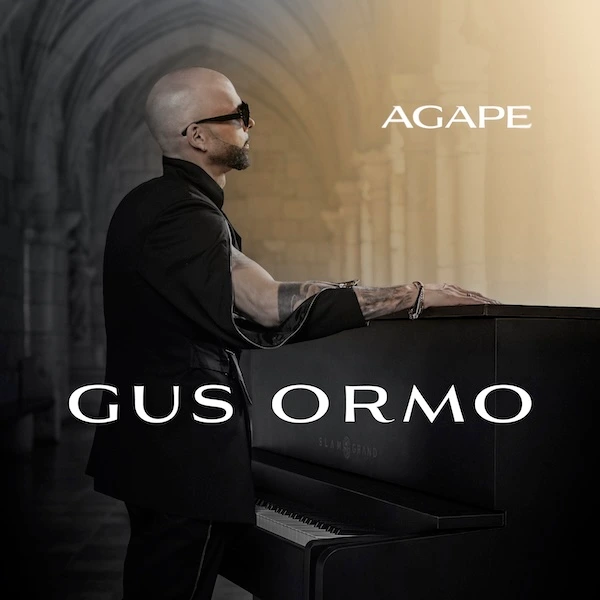
Artist: Gus Ormo
Track: AGAPE
Style: Jazz
About The Artist: A Second Look at Gus Ormo
Sometimes discovering more music from an artist you have already enjoyed can be just as rewarding as finding someone completely new. Having previously featured Gus Ormo’s “Latidos” here on BeMusi, I was very happy to return to his music and discover “AGAPE”, a piece that once again demonstrates just how much musicality and emotional expression can be communicated without a single vocal.
In fact, “AGAPE” was the track that first introduced me to Gus’s work, and it remains a real treat for the ears. There is a warmth and sense of soul running through the entire performance, but what particularly caught my attention is the way Gus uses space, silence and restraint as active parts of the composition.
That idea becomes even more interesting when you understand Gus’s relationship with music. He describes himself as someone who can lose himself for hours in his studio, composing and playing piano, and talks about music as something that has been part of him since childhood. His new instrumental album, Ágape, is the culmination of 12 years of work, patience and refinement. It is clearly more than simply another release in a catalogue. It represents a long period of musical development and a deeply personal relationship with his art.
Track Spotlight
The first thing that struck me about “AGAPE” is its incredible sense of feel. There is something very natural about the way the music breathes, with the ensemble knowing exactly when to move forward and when to step back and leave space.
Those moments of silence are particularly effective. They are not simply gaps between musical ideas. They become part of the composition itself. The ensemble builds towards each stop, creating anticipation, and then everything resets before the next section begins. That gives the piece a wonderful sense of movement without needing to constantly add more musical information.
What is particularly interesting is how closely this connects with Gus’s own description of his artistic world. He talks about silence as something capable of communicating emotion, almost as a musical language in itself. Listening to “AGAPE”, that does not feel like an abstract idea. You can actually hear it in the arrangement.
It is a deceptively simple idea, but it is something that many musicians and producers can learn from. Silence only works when there is something worth waiting for. Here, the anticipation created by the rests is a direct result of the musical material that comes before them.
There is also a real sense of pathos throughout the performance. Even without a vocalist telling us what the music means, there is something deeply human in the way it is played. The emotion comes from the writing, but equally from the musicians’ ability to inhabit the music.
That seems particularly appropriate for an album that Gus describes in such personal terms. He talks about Ágape as a way of giving himself completely through music, without conditions. You can hear that sense of sincerity in the performance. Nothing feels forced or emotionally exaggerated. The music simply allows the feeling to emerge.
The accompanying video adds another dimension to the piece too, combining live performance with dance while keeping the music at the centre. It gives the listener another way into the composition and reinforces the sense that “AGAPE” is intended to be experienced as a complete artistic piece rather than simply heard as an audio recording.
Songwriting & Arrangement
The songwriting is exceptionally assured for this style of music. It is laid back, deeply musical and carries a real sense of sophistication without ever becoming overly complicated.
There were moments where the writing brought artists such as Christopher Cross and Courtney Pine to mind, not because “AGAPE” sounds like either of them, but because there is a similar level of professionalism and musical confidence in the writing. It feels sophisticated and, perhaps more importantly, completely comfortable in its own musical language.
The overall arc of the piece is particularly strong. Themes return, but they are not simply repeated because the arrangement needs something to fill the space. They are explored and presented in different ways, giving the composition a real sense of economy.
The opening motif is a great example. It immediately gives the listener something to hold onto, but Gus does not overuse it. The idea soon gives way to an answer or another piece of musical material, allowing the composition to continue developing around that initial statement.
It reminded me of the way Miles Davis’s “So What” establishes such a memorable opening idea before allowing the music to move around it. The motif is important, but it does not become a cage for the composition.
The piano playing is where the music really shines for me. Those upper lines that float through the ensemble are beautifully judged. They continually bring freshness and interest into the arrangement without ever feeling as though they are competing for attention.
There is a lovely conversational quality to the piano. It feels as though it is listening and responding to the other musicians rather than simply sitting above them and delivering another continuous stream of notes.
I also thoroughly enjoyed the guitar lines that occasionally peek through. Again, they are not constantly pushed to the front, which makes the moments when they appear much more rewarding. This is arrangement through restraint, and it is something that can be surprisingly difficult to achieve.
Production & Sound
From a production and mix perspective, “AGAPE” is brilliantly balanced. There is a considerable amount of musical information happening within the arrangement, yet the listener never struggles to understand what is important.
I particularly like the way instruments such as the guitar are tucked into the overall picture without becoming hidden. On repeated listens, you begin to notice small details that perhaps did not immediately register the first time around.
For me, this is one of the characteristics of both great music and a great mix. You should be able to enjoy a piece immediately, but there should also be enough detail to reward coming back to it.
The stereo balance feels very natural and the frequency response is equally well judged. Nothing feels unnecessarily pushed, and there is a lovely warmth to the overall sound that makes the track inviting rather than clinical.
Most importantly, the production supports the musicality rather than getting in its way. The dynamic movement, the spaces between phrases and the interaction between the musicians are all allowed to remain part of the experience.
That is particularly important with music like this. A production can technically be extremely impressive while still removing some of the life from a performance. Here, the opposite happens. The production allows the musicianship to breathe.
Listen to the artist now
Spread the word - Share this artist!
My Curator Notes
What I find most refreshing about “AGAPE” is that it does not appear to be trying too hard to impress. There is clearly a high level of musicianship involved, but the technical ability is being used in service of the music rather than placed on display.
That distinction matters.
For emerging artists, there can be a temptation to add more because more feels like progress. Another layer, another effect, another instrument, another melodic idea. But “AGAPE” is a useful reminder that sophistication can come from knowing what not to add.
The arrangement creates interest through interaction, contrast and space. The musicians are given room to respond to one another, and the listener is given room to hear those interactions.
There is also something to be said for the patience behind the wider project. An album that has taken 12 years to develop inevitably carries a different perspective from something written simply to meet a release schedule. That does not mean every piece of music needs to take a decade to make, but it does demonstrate the value of allowing an artistic idea time to develop.
Gus describes music as something inseparable from who he is. Listening to “AGAPE”, that commitment feels believable because the music itself does not seem hurried. It has the confidence to breathe, to pause and to let an idea exist without immediately moving on to the next one.
That is a big part of what makes this such an engaging new music discovery for me. It is music that rewards attention without demanding it.
Artist Takeaways and Mentor Insight
Make space part of the composition
One of the most useful lessons in “AGAPE” is the treatment of silence.
When arranging your own music, do not only think about what should happen next. Think about where nothing should happen. A well placed rest can create anticipation, reset the listener’s attention and make the following musical statement feel much more significant.
Try taking a section of your arrangement and deliberately removing something rather than adding another layer. Listen to what happens to the sense of space.
Do not overuse your best idea
A strong motif does not need to appear constantly.
Introduce an idea clearly, allow the listener to recognise it, then give the music somewhere else to go. Bring the motif back when it has something new to say.
This creates a stronger sense of development and can make a relatively simple musical idea feel much more sophisticated.
Let musicians respond to one another
The piano and guitar in “AGAPE” demonstrate how powerful musical conversation can be.
If you are producing a band or ensemble, listen for opportunities where one instrument can answer another rather than having everyone play continuously. Even small interactions can make an arrangement feel much more alive.
Resist the urge to fill every frequency
A full sounding mix does not require every frequency range to be occupied all of the time.
Sometimes an instrument tucked slightly behind the main musical idea can contribute more to the overall production than an instrument fighting for attention in the foreground. Give important parts enough space to be heard, but allow supporting details to remain supporting details.
Give important ideas time to mature
The 12 year journey behind Ágape is perhaps the biggest lesson of all.
There is enormous pressure on independent artists to constantly release, constantly create and constantly remain visible. Those things can be important, but they should not come at the expense of developing the music itself.
Not every idea needs to be released immediately. Sometimes a piece needs to sit with you. Sometimes an arrangement needs to be stripped back. Sometimes the musician you are today needs to return to something written years ago and discover what it has become.
The important thing is to keep working, listening and developing.
Gus’s relationship with music appears to be built around that kind of commitment. “AGAPE” feels like the product of someone who is not simply trying to make another track, but someone who has spent years refining a musical language and allowing the work to develop on its own terms.
Explore More Gus Ormo
“AGAPE” was the track that first introduced me to Gus Ormo, and having subsequently discovered “Latidos”, I find it interesting to hear the connection between the two pieces. They approach their emotional expression differently, but both demonstrate a strong understanding of melody, dynamics, arrangement and the importance of performance.
For me, that is what makes returning to an artist worthwhile. You begin to hear not only individual tracks, but the musical identity connecting them.
If you enjoy instrumental music with warmth, sophistication and genuine musical feel, “AGAPE” is well worth spending some time with.
Follow the BeMusi curated playlists for more independent artists and emerging music, share this feature with someone who enjoys discovering musicians outside the mainstream, and explore more of Gus Ormo’s work. Find out more about Gus Ormo.
If you are an independent artist looking to put your own music in front of curators and discover new opportunities, you can also submit your music through Groover.
Indie Artists!
Indie artists!
Learn how Groover can boost your music career and reach new audiences.
Discover More Independant Artists
Discover more independent artists by following my playlists below, support indie artists by sharing this post, or submit your music via Groover. Keep exploring new music discoveries and support the next wave of emerging talent.
Please consider supporting independent artists by sharing new music discovery and spreading the word to celebrate the wonderful work indie artists do. You can also discover more emerging music through my bemusi playlists below and explore the blog to discover fresh finds you may be interested in.
Artists, want your work featured? Submit new releases through Groover for curator feedback and potential spotlight placement.