Independent Music Spotlight
Bruno Arredondo – A Silent Touch
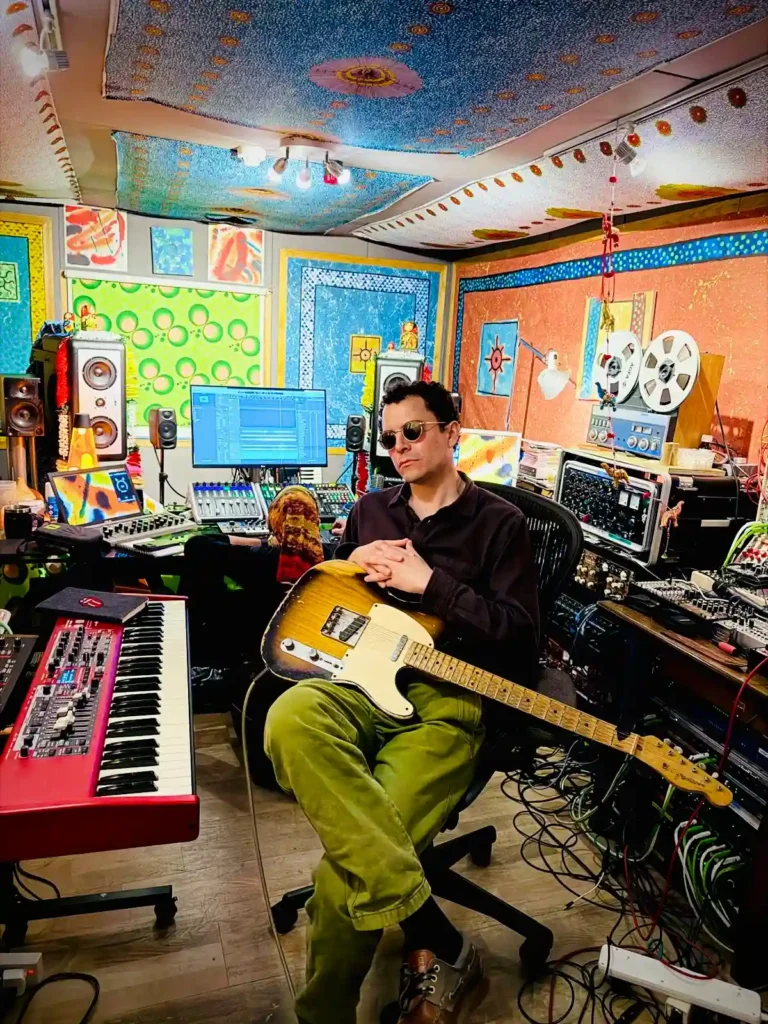
Artist: Bruno Arredondo
Track: A Silent Touch
Style: Experimental Jazz
About The Artist
This is my third review of Bruno Arredondo’s music, and I feel fortunate to have had the opportunity not only to listen to Clouds and A Caterpillar Rising his work but also to explore it more deeply through writing. There is a particular pleasure in returning to an artist whose creative approach continues to offer something new to discover. With A Silent Touch, Bruno has created another fascinating musical journey, one that rewards careful listening while leaving plenty of room for personal interpretation.
Best known as the guitarist and co-leader of New York-based outfit The Dye, Bruno is also developing an increasingly distinctive identity as a solo composer. His latest instrumental single is the first release from La Femme Invisible, an album that draws inspiration from art rock, ambient music, psychedelic jazz and the atmosphere of twentieth-century cinema.
What makes Bruno’s music particularly interesting to me is the relationship between experimentation and emotional connection. His compositions are harmonically rich and full of unexpected details, yet they never feel as though complexity is the objective in itself. There is always something for the listener to hold on to, whether that is a melodic idea, a developing texture or simply the feeling created by the music.
Track Spotlight
There is something wonderfully unhurried about A Silent Touch. Built around acoustic and electric guitars, piano and subtle contributions from tenor saxophone, the track gradually establishes its own musical landscape. Rather than relying on an obvious melody or conventional song structure, Bruno allows the arrangement to develop through small changes in texture, harmonic movement and the interaction between instruments.
The relaxed guitar rhythms and sustained textures initially reminded me of some of the musical territory explored by Pink Floyd. However, there is an important distinction between drawing on familiar musical influences and simply reproducing a sound. Bruno takes elements that might feel recognisable and develops them into something much more personal. The result has a character of its own, balancing familiarity with a willingness to explore less predictable musical directions.
One of the strongest aspects of the composition is its structure. The arrangement gradually builds as additional layers emerge, creating a rich and immersive sound. Just as the listener becomes accustomed to that fuller texture, elements begin to recede, allowing the remaining instruments to take on a different significance. These transitions feel natural rather than calculated, giving the piece a sense of movement without drawing attention to the mechanics of the arrangement.
The interplay between the guitar parts is particularly engaging. Repeated plucked patterns appear to chatter between different positions in the stereo image, while more experimental passages introduce a sense of spontaneity. At times, the instruments seem to respond to one another, almost as though they are participating in an ongoing musical conversation. The subtle tenor saxophone adds another voice to this exchange, appearing within the arrangement without overwhelming its delicate balance.
There is also an emotional quality to the track that develops through its restraint. Nothing feels rushed, and the music does not need to make grand gestures to communicate something meaningful. Instead, its atmosphere emerges through the relationship between the instruments, the gradual evolution of the arrangement and the space Bruno allows between musical ideas.
The title A Silent Touch feels particularly appropriate. There is a quiet intimacy to the piece, but it is not static or melancholy throughout. Beneath its reflective surface, there is a sense of movement and possibility, as though the music is gradually finding its way towards something new.
Bruno has described this as the most hopeful piece on La Femme Invisible, drawing inspiration from the stillness following a New York rainstorm, the vivid colours of autumn and the return of butterflies in early spring. Those images provide an interesting context for the music, particularly its sense of transformation. Yet the composition also works beautifully without that explanation, allowing listeners to discover their own associations and emotional responses.
“A Silent Touch invites the listener to explore, but it never feels self-indulgent or disconnected from the experience of listening.”
Darren Stone
Listen to the artist now
Spread the word - Share this artist!
My Curator Notes
One of the things I love about music is the journey from that first moment of inspiration to the finished recording. Why do we pick up a guitar to explore a few notes, sit at a piano and discover an unexpected harmonic relationship, or begin layering sounds without knowing exactly where they will lead? Those initial moments are deeply personal. Hearing the finished piece gives us an opportunity to experience something of that journey for ourselves.
What I particularly enjoy about Bruno’s work is the way he brings experimentation and expression together without sacrificing accessibility. Music can be experimental without losing its emotional connection, just as it can be harmonically rich without becoming inaccessible. A Silent Touch manages to bring those qualities together in a way that feels both considered and natural. The music invites the listener to explore, but it never feels self-indulgent or disconnected from the experience of listening.
There is also a valuable lesson here about musical identity. Almost every musician draws inspiration from artists, records, genres or experiences that have come before them. The challenge is not to avoid those influences, but to understand what attracts us to them and discover how we can transform those ideas through our own creative decisions. Bruno’s music demonstrates how familiar instruments and musical language can become deeply individual through arrangement, harmonic development and the way different textures interact.
As a producer and mix engineer, I am particularly interested in how Bruno uses the stereo image. The repeated guitar patterns could have been positioned centrally, allowing them to sit neatly within the mix. Instead, their placement across the stereo field creates movement and interaction. The instruments are not simply occupying separate positions; they contribute to the way the listener experiences the composition as it unfolds.
There is a lovely sense of depth, too. The music moves from left to right, but it also has a sense of dimension from front to back. This is an important distinction because a good mix is not simply about ensuring that every instrument can be heard clearly. It is about understanding how sounds occupy a three-dimensional space, how they interact and how their relationships can influence the listener’s perception of the music.
These production decisions also reinforce the connection between Bruno’s music and visual storytelling. I can genuinely imagine this kind of evolving, atmospheric composition working beautifully alongside experimental theatre, particularly productions that use physical movement to communicate emotion and narrative. The music creates a sense of movement and tension without needing to dictate exactly what the audience should feel or imagine.
That is a strength worth recognising. When composition, arrangement and production work together, the technical decisions become part of the creative expression rather than separate processes. The stereo movement, contrasting textures and changing density all contribute to the identity of A Silent Touch. Nothing needs to draw attention to itself because everything serves the wider musical picture.
Artist Takeaways and Mentor Insight
There are several useful lessons that independent artists can take from A Silent Touch, whether they work in experimental jazz, alternative rock, ambient music or a completely different style.
1. Let your influences become part of your identity
It is perfectly natural to be inspired by other musicians. The important thing is to move beyond imitation and explore what those influences mean to you personally.
If you admire a particular artist’s use of harmony, ask yourself what makes it effective. Is it the chord movement, the tension between notes, the instrumentation or the way the arrangement develops? Once you understand the underlying idea, experiment with different ways of expressing it.
You do not need to reinvent music from scratch. Often, originality comes from combining familiar elements in an unexpected way and making creative decisions that reflect your own musical instincts.
2. Make arrangement part of the storytelling
One of the most effective aspects of A Silent Touch is its gradual development. The arrangement builds, recedes and changes direction without losing its identity.
Try applying this approach to your own music. Rather than adding another instrument every time a section needs more energy, consider what might happen if you removed something instead. A reduction in density can make the next entrance feel more significant, while a small change in instrumentation can create movement without requiring a completely new section.
A useful exercise is to listen to your arrangement and identify three moments where the musical texture could change. Experiment with adding, removing or repositioning parts, then listen to how those decisions affect the overall emotional journey.
3. Treat production as part of composition
Bruno’s use of stereo placement demonstrates how production can influence the listener’s experience of a piece.
When mixing your own music, think beyond whether each instrument sounds good in isolation. Consider how the parts interact. Could a repeated guitar phrase become more engaging if it moved across the stereo image? Would a sustained texture feel more atmospheric if it occupied a different sense of depth? Could a change in the balance between two instruments create the impression of a musical conversation?
These decisions do not require expensive equipment or complicated processing. Sometimes a thoughtful adjustment to panning, level or arrangement can achieve more than adding another effect.
4. Give the listener room to participate
Not every composition needs to explain itself. Music can communicate through atmosphere, suggestion and ambiguity, leaving space for listeners to bring their own experiences to it.
This is particularly valuable when creating instrumental music. A strong composition can establish an emotional direction without prescribing a specific interpretation. Think about what you want the listener to experience, but remain open to the possibility that they may discover something you did not consciously intend.
That does not mean avoiding clear musical ideas. It means recognising that the listener is part of the experience, too.
5. Build a wider creative world around your music
Bruno’s solo work and his ongoing involvement with The Dye demonstrate how an artist can explore different creative directions without abandoning an established musical identity.
His album La Femme Invisible draws on cinematic influences, including films by Hiroshi Teshigahara, Charles Laughton and Michelangelo Antonioni. These references provide a wider context for the music, connecting composition with visual storytelling and atmosphere.
Independent artists can explore similar connections when developing their own releases. Think about the books, films, visual artists, places or experiences that influence your work. These connections might inform your artwork, promotional writing, live presentation or the way you introduce a new release to listeners.
The aim is not to manufacture a story around your music. It is to recognise the ideas that genuinely shape your creative process and find thoughtful ways to communicate them.
Ultimately, A Silent Touch is a reminder that experimentation does not have to come at the expense of connection. The most interesting creative decisions are often those that allow an artist to explore unfamiliar territory while maintaining a clear sense of identity. For musicians developing their own sound, that balance is well worth pursuing.

Indie Artists!
Indie artists!
Learn how Groover can boost your music career and reach new audiences.
Discover More Independant Artists
Discover more independent artists by following my playlists below, support indie artists by sharing this post, or submit your music via Groover. Keep exploring new music discoveries and support the next wave of emerging talent.
Please consider supporting independent artists by sharing new music discovery and spreading the word to celebrate the wonderful work indie artists do. You can also discover more emerging music through my bemusi playlists below and explore the blog to discover fresh finds you may be interested in.
Artists, want your work featured? Submit new releases through Groover for curator feedback and potential spotlight placement.