Barton Kaye's A Brave Hallow's Eve: The Art of Orchestral Storytelling
There is something particularly rewarding about hearing a composer bring an orchestra to life with a clear sense of imagination. In A Brave Hallow’s Eve, Belgian composer Barton Kaye creates a musical world that balances gothic mischief, dramatic tension and moments of genuine beauty. With its imaginative orchestration, expressive melodies and carefully developed sense of narrative, the composition demonstrates how instrumental music can tell a compelling story without a single word being spoken.
For me, the piece also recalls something I have always admired about the work of composers such as Danny Elfman and John Williams: the ability to make orchestral music entertaining, emotionally engaging and full of character, while ensuring that every musical decision contributes to a larger dramatic picture.
Listen To The Artist
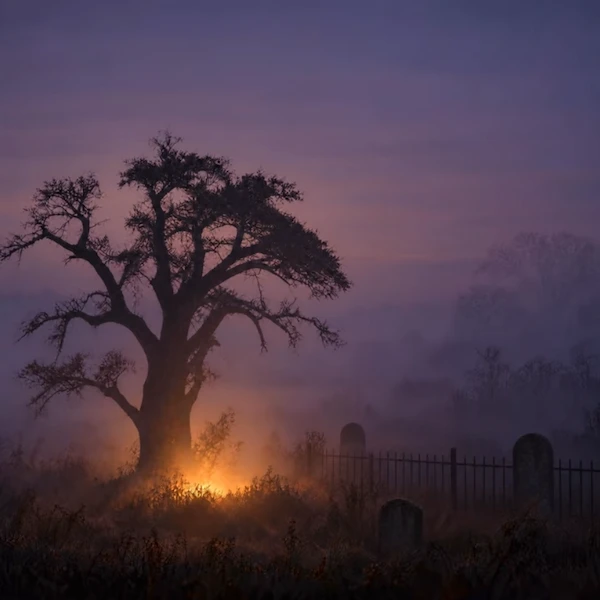
Artist: Barton Kaye
Track: A Brave Hallow's Eve
Style: Cinematic / Orchestral
In this review
About The Artist
Track Spotlight
Curator Notes
Mentor Insight
About The Artist
Based near Ghent in Belgium, Barton Kaye has built a substantial career across television and film, bringing extensive compositional and orchestral experience to his work as a film composer.
Before turning his attention to film, Barton spent more than two decades composing for Belgium’s largest broadcasters. During that time, he scored over 400 episodes spanning drama, comedy and children’s television, with his music reaching audiences in more than 70 countries.
That background is significant. Writing music for television requires an understanding of how music interacts with characters, scenes and narrative pacing. A composer must know when to establish an atmosphere, when to reinforce an emotional moment and when to allow the story itself to take precedence. Working across different genres also demands flexibility, with each project presenting its own creative challenges.
Barton studied composition and orchestration at LUCA School of Arts in Leuven and Berklee. His professional experience includes working with orchestrator Conrad Pope and Emmy-winning composer Mark Watters. He has also conducted the National Orchestra of Costa Rica, premiering his own work to sold-out audiences.
His recent credits include the short films The Birth of a Hysterical Woman and Lifecoach, as well as Interview with History for Belgian broadcaster VRT. His composition A Brave Hallow’s Eve was recorded with the Synchron Stage Orchestra in Vienna, bringing his orchestral writing to life through a full ensemble performance.
Barton describes his musical approach as melodic, precisely orchestrated and designed to serve the story. That philosophy sits at the heart of effective film composition. Technical ability and orchestral knowledge are essential, but their greatest value lies in how they help a composer communicate an idea.
It is a principle that becomes particularly apparent when exploring A Brave Hallow’s Eve.
Track Spotlight
My first impression of A Brave Hallow’s Eve was that it felt spellbinding. There is a wonderfully mischievous quality to the composition, with a gothic atmosphere that feels entirely appropriate for its subject. Yet the music offers considerably more than a collection of familiar Halloween gestures.
What makes the piece so engaging is the balance between its contrasting musical personalities. Mystery gives way to lighter, more playful passages, while moments of lyrical beauty introduce an emotional warmth that prevents the darker elements from dominating the experience.
I could easily imagine this music sitting alongside Danny Elfman’s work for The Nightmare Before Christmas. If it appeared within that soundtrack, I suspect many listeners would find it entirely convincing. The comparison is intended as a compliment to the composition’s combination of theatrical character, orchestral imagination and dramatic purpose, rather than a suggestion that Barton is simply imitating another composer.
There is a distinctive personality to the writing, and that personality develops through the way the musical ideas interact.
Establishing the Atmosphere
The opening immediately establishes a sense of uncertainty. Tremolos, sustained harmonics and fluttering woodwinds create an intriguing atmosphere, drawing the listener into an unfamiliar world without revealing too much about what lies ahead.
I particularly like the restraint in this opening. Rather than announcing every aspect of the musical character at once, the arrangement allows the atmosphere to develop. There is enough tension to create curiosity, but sufficient lightness to leave room for the imagination.
This is an effective approach to musical storytelling. The listener does not need to be told precisely what is happening. The combination of texture, register and movement provides clues, encouraging us to imagine the scene for ourselves.
As the music develops, the initial uncertainty begins to give way to something lighter and more playful. The woodwinds exchange musical ideas, creating a sense of movement and discovery. There is almost a feeling of exploring an enchanted environment in which something unexpected could be waiting around the next corner.
That change of character is important. Without it, the opening atmosphere might become predictable. By allowing the music to reveal a different personality, Barton keeps the listener engaged and creates the possibility of further dramatic developments.
The Emotional Power of Contrast
One of the most effective aspects of the composition is its movement between the whimsical and the unsettling.
The atmosphere becomes more uncertain as the piece progresses, creating a sense that the musical journey is not entirely without danger. This shift gives the lighter passages greater significance because we have already been encouraged to invest in the world the music creates.
The transition into the more lyrical material is particularly beautiful. Longer string lines introduce warmth and reassurance, offering a striking contrast to the shorter, more animated woodwind passages.
This is where I hear a connection with John Williams at his most lyrical. Williams has an exceptional ability to create melodies that feel emotionally meaningful without becoming unnecessarily complicated. Their impact comes from the shape of the musical phrase, the harmonic movement beneath it and the way the orchestration allows the melody to breathe.
Barton demonstrates a similar appreciation for the expressive possibilities of a well-developed melody.
The longer string lines give the music space to settle emotionally. After the uncertainty and movement of the earlier passages, these moments feel earned rather than simply inserted for variety.
They also remind us that the emotional power of orchestral music does not depend entirely on volume or complexity. Sometimes a change in phrasing, a warmer harmonic colour or a more sustained melodic line can communicate more than an entire passage of dramatic gestures.
Building Towards the Climax
As the composition moves towards its climax, the orchestra gradually gathers momentum.
The strings carry much of the dramatic development, while the bass provides weight and the horns contribute power and definition. The woodwinds continue to add movement through their runs and flourishes, ensuring that the arrangement retains its sense of activity as the musical picture becomes more expansive.
What I particularly admire is the relationship between the different sections.
The orchestra does not feel like a collection of instruments competing to make the greatest impression. Instead, the parts contribute to a larger musical purpose. Each section has its own character, but those individual personalities work together to sustain the developing drama.
The climax feels like a natural destination because the music has taken the time to establish its atmosphere, introduce contrasting characters and develop its emotional direction.
This is one of the most important principles in orchestral composition. A powerful climax is rarely just a matter of adding more instruments, increasing the volume or writing increasingly elaborate parts. It needs to feel like the fulfilment of something the music has been building towards.
In A Brave Hallow’s Eve, the developing arrangement gives the listener a reason to anticipate that moment. The eventual expansion of the orchestra therefore feels like a continuation of the musical story rather than an isolated display of orchestral power.
The result is a composition that works on two levels. It can be enjoyed for the sheer pleasure of its orchestral writing, but it also invites the listener to imagine the events, characters and emotional developments that might exist beyond the music itself.
That is an appealing quality in cinematic composition, where the imagination of the listener is every bit as important as the sound coming from the speakers.
"A satisfying climax is about musical development, not simply maximum intensity."
Curator Notes
As a composer myself, I am always interested in music that understands the relationship between technical skill and emotional communication.
It is entirely possible to write sophisticated orchestral music that demonstrates an impressive knowledge of harmony, counterpoint, instrumental ranges and orchestration. Those things matter, and developing them requires considerable study and experience. However, they are only part of the process. The more important question is what the composer does with that knowledge.
In A Brave Hallow’s Eve, the orchestral writing serves a clear expressive purpose. The changing textures, the contrast between animated woodwind passages and lyrical strings, and the gradual development towards the climax all contribute to the musical narrative. The composition is not simply demonstrating what an orchestra can do. It is exploring what an orchestra can communicate.
That distinction is particularly important for composers working in film, television, animation and games. Music often has to establish a character or environment quickly, sometimes without the luxury of a long introduction. A few carefully chosen instrumental colours can suggest a great deal, while a well-shaped melody can give a scene an emotional identity that dialogue alone might struggle to achieve.
I also appreciate the way this composition balances its different emotional qualities. The gothic elements provide a sense of mystery, but the music does not remain trapped in darkness. Playfulness, lyrical warmth and dramatic tension all have their place. This gives the composition a broader expressive range and makes its musical world more interesting to explore.
For me, this is one of the enduring attractions of composers such as Danny Elfman and John Williams. Their most memorable work often combines strong melodic writing with a vivid sense of character. Their music can be humorous, frightening, tender or heroic, sometimes moving between these qualities within a single composition. The orchestra becomes a means of storytelling, with each instrument and musical gesture contributing to the personality of the scene.
Barton understands the value of that approach. His background across television and film provides a relevant context for a composition that places so much emphasis on character, pacing and musical contrast.
The recording is another important part of the experience. Having the composition performed by the Synchron Stage Orchestra in Vienna gives the writing the opportunity to be heard through a full orchestral performance. The resulting sound has a satisfying sense of scale, while the individual sections retain their character.
What I particularly value in the presentation is the way the performance allows the arrangement to breathe. The strings have the warmth needed for the more lyrical passages, the woodwinds retain their lightness and definition, and the brass brings weight to the more dramatic moments without overwhelming the musical detail.
For a composer and producer, it is a useful reminder that production should support the character of the music. A larger sound is not automatically a more effective one. The recording needs to preserve the expressive qualities of the performance, allowing the orchestration and musical ideas to communicate clearly.
Ultimately, A Brave Hallow’s Eve succeeds because the different elements work towards the same goal. The composition has character, the arrangement develops with purpose, and the orchestral performance gives those ideas the space they need to make an impression.
That combination is what makes the piece worth exploring beyond its immediate seasonal appeal.
Mentor Insight & Artist Takeaways
Barton Kaye’s composition offers several useful lessons for musicians, whether they are writing for a full orchestra, a small ensemble or a production built entirely within a digital audio workstation.
1. Give Your Music a Clear Emotional Identity
One of the strengths of A Brave Hallow’s Eve is that it establishes a recognisable musical world. The combination of gothic mystery, playfulness and lyrical warmth gives the composition a distinctive identity without requiring the music to remain within a single emotional register.
For independent artists, this principle applies to every genre. A song does not necessarily need an unusual chord progression or a complicated arrangement to stand out. Sometimes its identity comes from the particular combination of emotions it explores.
Try this: Before starting your next composition, write down three words that describe the emotional world you want to create. They might be mysterious, intimate and hopeful, or restless, playful and melancholic. Use them as a creative guide when choosing your sounds, melodies, harmonies and arrangement.
The aim is not to restrict your ideas, but to give them a common direction.
2. Use Contrast to Make Important Moments More Powerful
The movement between the playful woodwind writing and the more sustained string melodies is one of the composition’s most effective features.
Contrast creates context. A quiet passage can make a louder section feel more dramatic, while a lyrical melody can have greater emotional impact when it follows something unsettled or rhythmically active.
This is equally relevant to songwriting and production. If every section of a track is equally dense, loud and energetic, the listener has fewer opportunities to recognise a change in direction.
Try this: Take a current project and identify its most important musical moment. Then ask yourself what could happen immediately before it to make that moment more effective.
You might simplify the instrumentation, reduce the rhythmic activity, introduce a more sustained texture or create a brief moment of space. Experiment with making the surrounding music less busy rather than making the main section bigger.
Sometimes the most effective way to emphasise an idea is to give it room.
3. Think About the Role of Every Instrument
A strong orchestral arrangement is not simply a matter of assigning parts to instruments that sound impressive.
Each section needs a purpose. The strings might carry the principal melody, the bass might establish harmonic weight, the horns might reinforce a dramatic theme, and the woodwinds might provide movement or introduce a contrasting musical character.
These roles can overlap, but the composer needs to understand how they relate to one another.
The same principle applies when producing music with synthesizers, guitars, keyboards and electronic percussion. Every sound may be attractive in isolation, yet the arrangement can become less effective if too many elements compete for the same musical space.
Try this: Listen to one of your mixes and write a short description of what each main instrument or sound contributes. Is it carrying the melody, supporting the harmony, providing rhythmic movement, creating atmosphere or reinforcing the emotional impact?
If two elements perform the same role, experiment with simplifying one of them or giving each a more clearly defined purpose.
The objective is not to remove complexity for its own sake. It is to make the complexity work.
4. Develop Your Climax Rather Than Simply Making It Louder
The climax of A Brave Hallow’s Eve feels connected to the musical development that precedes it. The arrangement gradually gathers momentum, allowing the orchestra to expand while retaining a clear sense of direction.
This is a valuable lesson for any composer. An impactful climax needs preparation. The listener should feel that the music has arrived somewhere meaningful.
In a pop song, that might involve introducing a new melodic element in the chorus. In an instrumental composition, it could mean gradually widening the orchestration or developing a theme that has already been introduced. In electronic music, it might involve changing the harmonic context or creating a more substantial rhythmic foundation.
Try this: Identify the climax of a piece you are working on. Then trace the musical elements that lead towards it.
Ask yourself what the listener is anticipating, what changes as the music develops and whether the climax fulfils those expectations. If the section feels underwhelming, consider whether the preceding arrangement has prepared it effectively before adding more layers or increasing the volume.
A satisfying climax is about musical development, not simply maximum intensity.
5. Let Technical Knowledge Serve the Story
Barton describes his approach as melodic, orchestrally precise and built to serve the story. That is a useful principle for musicians at every stage of their development.
Learning harmony, orchestration, sound design, mixing and production techniques gives you more ways to express an idea. But knowledge becomes most valuable when it helps you solve a creative problem.
A technically impressive sound is not necessarily the right sound for the composition. A complicated arrangement is not automatically more expressive than a simple one.
Try this: When making a significant musical or production decision, ask yourself two questions.
First, what does this choice contribute to the music? Second, would the composition communicate its idea more effectively if I approached it differently?
These questions encourage you to evaluate your decisions in terms of their purpose rather than their complexity.
The goal is not to demonstrate everything you know. It is to use what you know to make the music more convincing.
Mentor Insight: The Craft Behind the Imagination
One of the most encouraging aspects of A Brave Hallow’s Eve is the way it demonstrates that technical knowledge and imagination are not competing qualities. They become most powerful when they work together.
As musicians, we can spend years learning the mechanics of our craft. We study chords, scales, orchestration, recording techniques, mixing and the many other skills involved in turning an idea into a finished piece of music. That knowledge matters, but it is easy to become so focused on the mechanics that we lose sight of the original reason for making the music.
The question is not simply whether a chord progression is sophisticated, an orchestration is complex or a mix sounds impressive. The question is whether those decisions help communicate something worth hearing.
Barton Kaye’s composition offers a useful reminder of this distinction. Its appeal lies not just in the sound of a full orchestra, but in the way the music moves between mystery, playfulness, tension and beauty. The technical craft gives those ideas their shape, while the musical imagination gives them a reason to exist.
There is also something valuable in the freedom that instrumental music offers the listener. Without lyrics or dialogue to define every detail, the music leaves space for individual interpretation. One person might imagine a fantastical Halloween adventure, while another simply enjoys the changing colours and emotional contrasts of the orchestral writing.
Both responses are valid. Good storytelling through music does not always require the listener to imagine precisely the same thing as the composer.
For independent musicians, this is an important lesson. Developing your own voice does not mean inventing an entirely new musical language or avoiding the influence of other artists. It means understanding what you admire, learning from it and gradually discovering how to use those influences in a way that reflects your own creative instincts.
The technical skills you develop are there to help you do that. They are tools for bringing an idea to life, not the idea itself.
The most memorable music does more than demonstrate what a musician can do. It gives the listener a reason to feel, imagine and return.
That is the lasting appeal of A Brave Hallow’s Eve, and a principle worth carrying into any creative project.
Enjoyed this discovery? Share it!
DISCOVER MORE
Keep Discovering Independent Music
Discover music beyond the usual playlists. Explore handpicked tracks, independent artists and unexpected gems, chosen for their creativity, character and the stories they tell. New discoveries start here.