Fábio Oliveira Turns a Personal Connection with Babitonga Bay into a Celebration of Jazz
Before I begin, I just want to let you know, dear reader, that I can’t get enough of this incredible composition. To me, it already feels like a classic. As jazz goes, it’s catchy, accessible and full of creative invention. Put simply, I love it. I think I’ve listened to it at least ten times already!
Some musical compositions capture your attention through a memorable melody, while others reveal their strengths through the relationships between their different parts. On “Festa na Babitonga”, Brazilian pianist and composer Fábio Oliveira brings together sophisticated jazz writing, Latin rhythmic vitality and an engaging sense of musical freedom. The result is a composition that feels immediately accessible while offering plenty to discover beneath the surface. Inspired by his connection with Joinville and Babitonga Bay, the track also carries a personal story about place, memory and the people who shape our creative lives.
Listen To The Artist
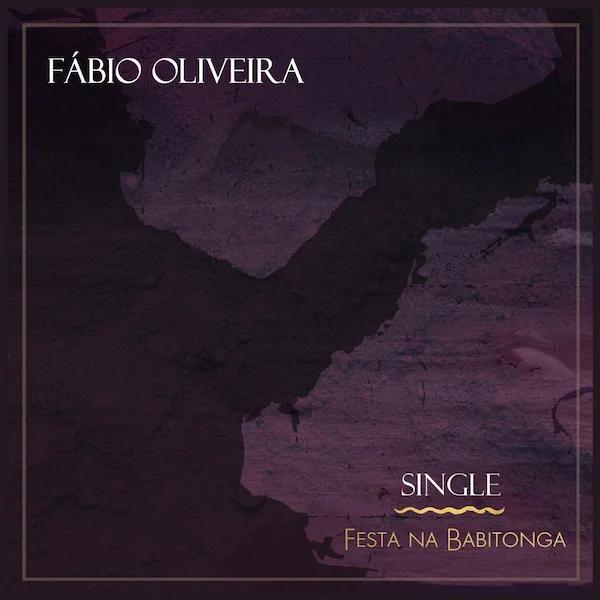
Artist: Fábio Oliveira
Track: Festa na Babitonga
Style: Jazz
In this review
About The Artist
Track Spotlight
Curator Notes
Mentor Insight

About The Artist
Based in Joinville, in the Brazilian state of Santa Catarina, Fábio Oliveira has developed his musical career across performance, arranging, accompanying other musicians, studio work and collaborative projects. His experience across these different roles has helped shape a musical identity grounded in instrumental music, improvisation and the interaction between musicians.
“Festa na Babitonga” represents an important step in his development as a composer. Having spent years working with other artists and contributing to different musical projects, he is now bringing his own original compositions to the forefront with his debut album, scheduled for release on 13 November.
The project builds on the musical language he has been developing with Trio Babitonga and through other original work. Piano, jazz, Brazilian music, improvisation and collective performance all contribute to its identity.
What makes this transition particularly interesting is the relationship between individual expression and collaboration. A pianist may begin with a musical idea, but developing that idea into a complete composition requires an understanding of how other instruments, melodic lines and rhythmic elements can contribute to the wider picture.
For Oliveira, collaboration is not simply a practical part of making music. It is closely connected to the way he understands his own journey as a musician.
That perspective also informs the title track, which draws together his personal connection with the region where he grew up and the relationships he has developed throughout his musical life.
Track Spotlight
Babitonga Bay has been part of Oliveira’s life since adolescence. Memories of fishing trips with his father, the surrounding landscape and the experiences that have shaped his life in Joinville all contribute to the inspiration behind “Festa na Babitonga”.
Rather than treating the location simply as a geographical reference, Oliveira uses it as a starting point for a wider idea. The celebration suggested by the title becomes a metaphor for the way different people, experiences and creative paths come together.
It is an appealing concept for an instrumental composition because music can communicate a sense of connection without needing to explain it through lyrics. Melody, harmony, rhythm and the interaction between instruments can express relationships in their own way.
Listening to the track, what immediately stands out is the balance between compositional sophistication and natural musical flow. There is a familiarity to the harmonic language, with the character of classic jazz informing the writing, but the composition never feels as though it is simply recreating an established style.
Instead, the musical ideas have room to develop. The relationship between melody and harmony creates interest, while the Latin rhythmic influence gives the piece a sense of movement and vitality. The music feels considered without becoming rigid, allowing the composition to retain a sense of freedom.
This balance is particularly effective. Sophisticated harmony can give a piece considerable depth, but if every idea demands the listener’s attention at once, the overall effect can become difficult to follow. Here, the musical details contribute to a coherent whole, allowing the listener to appreciate both the individual parts and the larger musical picture.
There is also a satisfying sense of development as the track progresses. Rather than relying on a single musical idea, the composition continues to offer new details and relationships between its different elements. The energy builds towards a particularly effective crescendo, giving the ending a sense of arrival that feels connected to the journey leading up to it.
That final development reinforces the idea behind the title. A celebration brings people and experiences together, and the composition gradually gathers its musical energy towards a shared conclusion.
For a piece inspired by personal memories and a strong sense of place, that is an especially fitting approach.
"A composition may begin with one person's vision, but its final character emerges through the relationships between the musical ideas and the people who contribute to them."
Curator Notes
One of the most interesting aspects of “Festa na Babitonga” is the way it balances familiarity with discovery. As a composer, I am always interested in music that draws on an established musical language but finds ways to make it feel personal.
Jazz offers an enormous vocabulary of harmonic movement, melodic phrasing and rhythmic possibilities. The challenge is not simply to understand those conventions, but to use them in a way that gives a composition its own identity.
Oliveira’s writing demonstrates the appeal of that approach. The harmonic language feels rooted in a rich musical tradition, while the melodic interplay and rhythmic energy give the piece its own character. There is enough familiarity to make the music approachable, but sufficient detail to reward repeated listening.
The Art of Musical Conversation
For me, one of the great pleasures of listening to a well-developed arrangement is hearing how the different musical ideas interact.
A melody can be compelling in isolation, but an arrangement becomes much more interesting when other parts contribute their own ideas, creating relationships that develop as the music progresses. Countermelodies, harmonic movement and rhythmic interplay can all add another dimension to the listening experience.
The important thing is that these elements should support the composition rather than compete with one another.
This is where careful composition makes such a difference. Writing multiple musical lines requires more than creating several interesting parts. The composer must consider how those parts work together, where the listener’s attention should fall and how the arrangement maintains its sense of direction.
“Festa na Babitonga” is particularly rewarding in this respect. Its musical detail does not come at the expense of its overall flow. There is a sense that the different ideas belong to the same musical conversation, contributing to something larger than any individual part.
That is a valuable lesson for musicians working in any genre. Complexity is not necessarily a problem, but it needs purpose. Every additional idea should help develop the musical picture.
Why Restraint Matters in Production
The production is another part of the experience that deserves attention.
When an arrangement contains considerable harmonic and melodic detail, it can be tempting to push every instrument forward in the mix. More brightness, more width and greater loudness might initially seem to create additional impact, but these changes can also make it harder to appreciate the relationships between the musical parts.
From my perspective as a mix engineer, knowing when not to push is just as important as knowing when to make a change.
The production on “Festa na Babitonga” allows the composition to breathe. The tonal balance feels comfortable, the stereo image supports the separation of the musical elements, and the dynamics retain a natural sense of movement.
This matters because the listener needs space to follow the composition. When individual parts can be heard clearly without the mix drawing unnecessary attention to itself, the musical relationships become easier to appreciate.
The gradual build towards the ending is a good example of why preserving dynamics matters. The sense of arrival comes from the development of the music itself, rather than relying on sheer loudness to manufacture excitement.
For independent artists, this is an important distinction. Production should help communicate the character of a song or composition, not obscure it beneath layers of processing.
Finding a Personal Musical Identity
The connection between Oliveira’s music and Babitonga Bay adds another dimension to the composition.
Many musicians begin with something familiar: a place, a memory, a relationship or an experience that continues to occupy their thoughts. The challenge is finding a way to transform that personal starting point into something that other people can connect with.
Instrumental music offers particular possibilities here. Without lyrics defining the meaning, the listener has room to bring their own experiences to the music. The original inspiration remains important, but it does not have to dictate every listener’s interpretation.
Oliveira’s idea of a celebration that brings together different people and stories also reflects the collaborative nature of music itself. A composition may begin with one person’s vision, but its final character emerges through the relationships between the musical ideas and the people who contribute to them.
That connection between personal inspiration and collective expression gives “Festa na Babitonga” an interesting creative foundation.
Mentor Insight & Artist Takeaways
1. Draw on Musical Traditions Without Becoming Trapped by Them
Understanding the music that came before you is an important part of developing as a composer or songwriter. Studying established harmonic patterns, melodic structures and rhythmic approaches gives you a vocabulary from which to work.
However, familiarity with a style is only the starting point. The more interesting question is what you can do with that knowledge.
Oliveira’s composition offers an example of how a recognisable jazz language can provide a foundation for fresh musical ideas.
Try this: Choose a piece of music from a tradition you admire. Identify one element that makes it distinctive, such as its harmonic movement, rhythmic feel or melodic phrasing. Write a short passage using that principle, then introduce an idea from another musical influence. Focus on making the combination feel natural rather than simply placing two styles side by side.
2. Give Every Musical Part a Purpose
A strong arrangement is not simply a collection of good ideas. It is a structure in which the different elements work together.
Countermelodies, additional instruments and harmonic details can enrich a composition, but only when they contribute to the overall direction. Adding more parts does not automatically create more interest.
The real skill lies in understanding how the musical elements relate to one another.
Try this: Take one of your existing arrangements and listen to each part individually. Ask yourself what it contributes to the music. Does it develop the melody, strengthen the rhythm, provide harmonic support or create contrast? If a part does not seem to serve a clear purpose, experiment with simplifying it or changing its role. You may discover that removing something creates more impact than adding another layer.
3. Turn Personal Experiences into Creative Starting Points
Oliveira’s connection with Babitonga Bay demonstrates how a familiar place can become the inspiration for an original composition.
You do not need an extraordinary life event to create meaningful music. Everyday experiences can provide powerful creative material when you explore the emotions, associations and details that make them significant to you.
The key is to move beyond simply describing an experience and find the musical ideas that express what it means to you.
Try this: Choose a place that holds a particular memory. Write down five details you associate with it, including colours, movement, sounds, people or feelings. Use those observations to develop a short musical sketch. You might explore contrasting registers, changes in rhythmic energy or a recurring melodic idea. There is no need to represent each detail literally. Instead, see whether the atmosphere of the place can influence the music.
Mentor Insight: The Importance of Making the Music Your Own
What I take from “Festa na Babitonga” is the value of combining musical knowledge with a clear personal perspective.
Learning harmony, arrangement and production techniques gives us tools to work with, but technical understanding alone does not create a distinctive musical identity. That develops when we begin to connect what we know with the things that matter to us.
For Oliveira, that connection comes through his relationship with Joinville, his memories of Babitonga Bay and the people who have contributed to his development as a musician. Those experiences provide a foundation for a composition that draws on established jazz traditions while maintaining its own sense of character.
There is also an important lesson in the balance between complexity and accessibility. As musicians, we can become so involved in the details of a composition that we lose sight of how it feels to someone hearing it for the first time. Sophisticated harmony and intricate arrangements have their place, but they are most effective when they contribute to a convincing musical experience.
The same principle applies to production. We should understand our tools well enough to make informed decisions, but we should never lose sight of the reason for using them. The aim is not to demonstrate how much we can do. It is to make the music communicate as effectively as possible.
Ultimately, developing as a musician means finding the point where your technical understanding, creative instincts and personal experiences begin to work together. Study the traditions that inspire you, pay attention to how musical ideas interact, and remain curious about the experiences that shape your own perspective.
The most interesting music often emerges when those things meet. “Festa na Babitonga” is a thoughtful reminder that a composition can draw on a rich musical heritage while still telling a story that belongs to the person who created it.
Enjoyed this discovery? Share it!
DISCOVER MORE
Keep Discovering Independent Music
Discover music beyond the usual playlists. Explore handpicked tracks, independent artists and unexpected gems, chosen for their creativity, character and the stories they tell. New discoveries start here.