New Town Lights Find Meaning in Life's Fleeting Moments on Finitude
How do we make peace with the fact that our time together is limited? It’s a question at the heart of Finitude, an atmospheric indie-acoustic track from Scottish songwriter Terence Graham, who records as New Town Lights. Inspired by reflections on mortality, human connection and the preciousness of everyday life, the song finds an unexpectedly warm perspective on a subject that could easily become sombre. Its emotional centre comes from a wonderfully simple moment in family life, reminding us that sometimes the most meaningful songwriting begins with words we never expected to hear.
Listen To The Artist
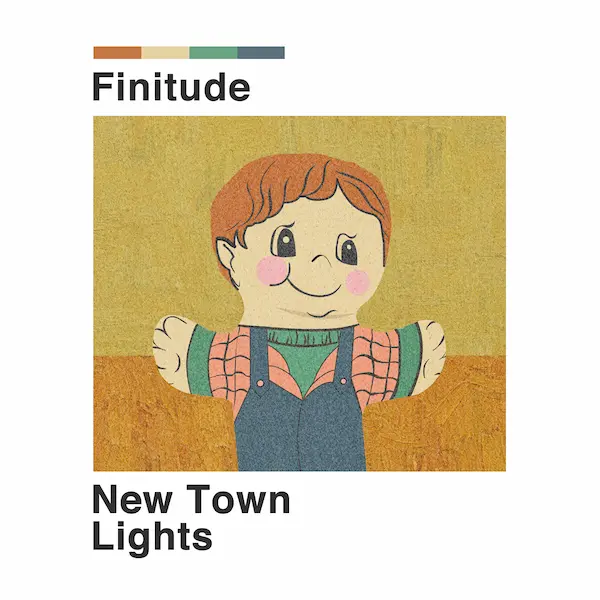
Artist: New Town Lights
Track: Finittude
Style: Indie Pop
In this review
About The Artist
Track Spotlight
Curator Notes
Mentor Insight
About The Artist

New Town Lights is the indie-acoustic project of Scottish songwriter Terence Graham. Through simple acoustic textures, storytelling and quiet wit, Graham finds musical inspiration in the everyday and the mundane, creating songs that leave room for both humour and genuine emotion.
Releasing independently through Up Ma Humph Recordings, Graham approaches songwriting with an appreciation for life’s smaller details. His stated aim is to create music that feels at home in ordinary moments, whether you’re listening in a café or reflecting on the drive home. It’s an inviting creative philosophy, grounded in the idea that music doesn’t need to be grand or overly serious to say something meaningful.
On Finitude, that approach takes on a particularly personal dimension. The track explores our limited time on earth, but rather than dwelling on mortality with dread, it turns towards gratitude, affection and the relationships that give our lives meaning.
Track Spotlight
The concept behind Finitude draws inspiration from Oliver Burkeman’s book 4,000 Weeks, which examines the limitations of our time and how we choose to spend it, as well as the opening sequence of the film Up, with its deeply affecting portrayal of love, shared experience and the passage of time. Both references offer a way into the track’s central idea: an awareness of life’s brevity can deepen our appreciation of the time we have with the people we love.
Perhaps the most moving part of the story, though, is how the song found its emotional anchor. Originally conceived as an instrumental, the track changed direction after Graham’s eight-year-old son wrote a line in his mother’s birthday card: “I’m going to love you all the way!” Those words became the heart of the song, bringing a child’s direct and wholehearted expression of affection into a piece about the finite nature of our lives.
It’s a lovely example of how songwriting can evolve through an unexpected real-life moment. An instrumental composition might establish a mood or explore an idea, but a single line of language can suddenly reveal what the music is really about. Here, the words connect the abstract concept of finitude with something immediate and personal: the desire to love someone for as long as we can.
The warm, atmospheric indie-acoustic setting suits that sentiment. Rather than treating mortality as something that demands a dramatic musical response, the track’s concept invites a more intimate approach. The emphasis is on connection rather than fear, allowing the underlying idea to resonate without needing to be overstated.
What makes the story especially compelling is that the song doesn’t attempt to solve the tension between love and impermanence. We know our time is limited, yet that knowledge needn’t diminish the experience of loving someone. It can make those everyday moments more precious. In that sense, Finitude offers a gentle invitation to consider not simply how much time we have, but what we choose to do with it.
"The important step is not to reproduce the source material, but to discover what it means in your own life."
Curator Notes
One of the most interesting aspects of Finitude is the way its central idea developed. The track began as an instrumental, yet its identity shifted when a line written by Graham’s son revealed a more personal emotional direction. For songwriters, this is a useful reminder that the original concept isn’t always the final destination. Sometimes a piece of music needs time to develop before the element that makes it distinctive becomes clear.
The words “I’m going to love you all the way!” are powerful partly because they are so uncomplicated. There’s no elaborate metaphor or attempt to sound profound. Instead, the line communicates affection with the natural directness of a child. Set against a subject as weighty as the limited nature of human life, that simplicity becomes especially affecting. It brings the listener back to the people and relationships that make the larger philosophical question matter.
The influence of 4,000 Weeks and Up also highlights how creative ideas can travel between different forms of storytelling. A book can provide a philosophical framework, while a film can demonstrate how emotion develops through a sequence of small, accumulated moments. A songwriter can take those broader ideas and translate them into something personal, using music to explore the same territory from a different perspective. The important step is not to reproduce the source material, but to discover what it means in your own life.
For independent artists, there’s encouragement here to remain receptive to the world beyond the studio. Not every useful lyric arrives during a scheduled writing session, and not every meaningful creative decision begins with a technical problem to solve. Conversations, family moments, books, films and passing observations can all become starting points. Keeping a note of those experiences gives you material to return to when a song needs a clearer sense of purpose.
Ultimately, Finitude is built around a recognisable human tension: our time is limited, but our capacity for connection gives that time meaning. By bringing a personal family moment into a broader reflection on mortality, New Town Lights finds a way to approach a profound subject through something intimate and relatable.
Mentor Insight & Artist Takeaways
1. Stay open to a song changing direction
Finitude began as an instrumental before finding its emotional anchor in an unexpected line of writing. This demonstrates why it’s worth remaining open to new possibilities, even when you think a piece is finished conceptually.
Try this: If a track feels musically complete but lacks a clear identity, step away from it for a while. Revisit it with a different question in mind: what is this music really trying to say? Experiment with a lyric, a spoken phrase or a different melodic approach before deciding that the original version is the only version.
2. Look for emotional truth in simple language
The line that inspired the direction of Finitude works because it expresses an enormous feeling in everyday words. Songwriters sometimes overwork lyrics in an attempt to make them sound significant, when a direct expression may carry greater emotional weight.
Try this: Write a verse using the language you would naturally use when speaking to someone you care about. Resist the urge to make every line poetic. Once the emotional meaning is clear, refine the rhythm, imagery and phrasing without losing the original honesty.
3. Turn broad ideas into personal experiences
Mortality is a subject that has inspired writers, composers and filmmakers for centuries. Its scale can make it difficult to approach in an original way. Graham’s experience offers a practical route into the subject: connect the larger idea to a specific moment that gives it personal meaning.
Try this: Choose a theme such as time, belonging, change or loss. Rather than writing directly about the theme, recall a real experience that helped you understand it. Build the song around the details of that experience and allow the wider meaning to emerge naturally.
4. Use influences as creative starting points
The connection between Finitude, 4,000 Weeks and Up illustrates how music can grow from ideas encountered elsewhere. Reading, watching films and engaging with other art forms can help you find subjects and perspectives that you might not reach through music alone.
Try this: Keep a creative reference journal. When a book, film or conversation stays with you, write down what affected you and why. Later, use that response as a prompt for a melody, lyric or musical texture. Focus on the emotional idea rather than trying to recreate the original work.
5. Let the production support the emotional intention
A warm, atmospheric indie-acoustic track has a different set of expressive possibilities from a dense, high-energy production. Neither approach is inherently better. The key is to choose sounds and arrangements that support what the song needs to communicate.
Try this: Before adding production layers, describe the emotional character you want the listener to experience in three words. Use those words to guide your choices around dynamics, space, instrumentation and effects. Revisit each element critically, asking whether it strengthens the intended atmosphere or simply adds complexity.
Mentor Insight: The Value of Recognising What Matters
As a composer, producer and mentor, I often encourage artists to think about the relationship between a song’s technical construction and its underlying emotional purpose. It’s easy to spend hours refining sounds, adjusting balances and polishing details, but those decisions become more meaningful when you understand what the music is trying to communicate.
The story behind Finitude offers a particularly clear example. A track that began as an instrumental found a new direction through a spontaneous expression of love. The significance wasn’t in the complexity of the words, but in the feeling they communicated and the way that feeling connected with the music already taking shape.
That doesn’t mean every song needs a dramatic personal story behind it. Sometimes a compelling song begins with a chord progression, an unusual rhythm or a sound that sparks your imagination. The lesson is to recognise when an unexpected idea offers a more meaningful direction than the one you originally planned.
It’s also worth considering how this principle applies during production. When you know what a song means to you, you have a clearer basis for making creative decisions. You can judge whether an arrangement is becoming too busy, whether a vocal needs more space or whether a particular sound distracts from the emotional centre. The goal isn’t to make the production smaller or simpler by default, but to make every decision more intentional.
Finitude ultimately points towards something that extends beyond songwriting. We cannot make more time, but we can become more conscious of how we use it and what we give our attention to. For artists, that includes the time spent making music, the experiences that feed our creativity and the people with whom we share our lives.
Sometimes the most valuable thing a songwriter can do is pay attention to an ordinary moment and recognise that it contains something worth expressing.
The takeaway: Stay open to the unexpected. A song’s defining idea may arrive from outside the studio, in the simplest words, at precisely the moment you weren’t looking for it.
Enjoyed this discovery? Share it!
DISCOVER MORE
Keep Discovering Independent Music
Discover music beyond the usual playlists. Explore handpicked tracks, independent artists and unexpected gems, chosen for their creativity, character and the stories they tell. New discoveries start here.